Organic search marketing is a strong way to reach Japanese consumers. AI search adds a practical opportunity: AI-powered translations have lowered the cost of testing multilingual content, and Japanese users are adopting AI search faster than most Western markets. This guide covers the most common SEO and LLMO mistakes I see brands make when entering the Japanese market, along with practical tips drawn from my work.
My recommendations come from:
- more than nine years in global demand generation and international SEO
- direct experience working with brands in Japan
- Analyzing Japanese-specific LLM citation data collected since early 2026 for Cairrot’s future research reports
- Key learnings from Japanese thought leaders and active experts in LLMO/GEO/SEO at recent events Search SEOul in Korea and Brighton SEO in San Diego. See also the broader list of AI SEO and AEO conferences. Relevant speakers and sources are noted throughout.
5 Common SEO Mistakes Western Brands Make in Japan
Western brands entering Japanese SEO and LLMO often repeat the same errors. These are the ones I see most frequently.
- They treat Yahoo Japan as a separate search engine that needs its own strategy. Yahoo Japan results are powered by Google’s algorithm. Focus ranking work on Google and check presentation differences on Yahoo Japan for high-value pages.
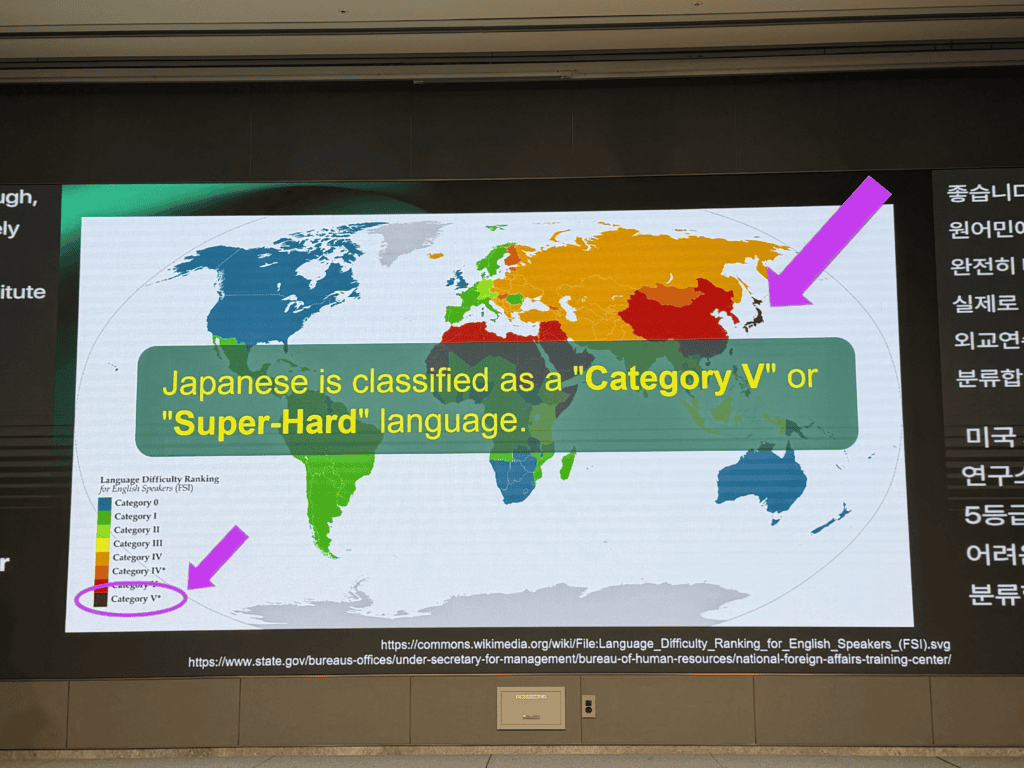
- They rely on AI translation without a fluent Japanese speaker reviewing the output or assisting with keyword research. Japanese is a Category V language for English speakers. Keyword work must account for Hiragana, Katakana, Kanji, and the English alphabet. Conference examples showed color-coded research that maps a target phrase across all four systems.
- They under-invest in Japanese social platforms and third-party mentions. Usage and AI citation patterns do not match. LINE and TikTok have high or growing usage but low citation volume in the data I reviewed. YouTube and note.com appear more consistently in AI responses.
- They publish blog content without Japanese names or faces attached. In telecom work and later observation, Japanese users frequently look for visual confirmation of a real person behind commercial content.
- They underestimate the localization required to build trust. Direct translation of English strategies and tone reduces credibility even when the words are accurate. Polite (です・ます) and plain (だ・である) writing styles serve different purposes and media.
These issues appear across both classic SEO and LLMO. Addressing them early improves the chance of being cited by AI systems and of converting the traffic that arrives.
Japanese Search Engines and How People Explore Information
Google holds the dominant share of search in Japan. Yahoo Japan retains measurable usage but runs on Google’s index. Ranking priorities can stay focused on Google.
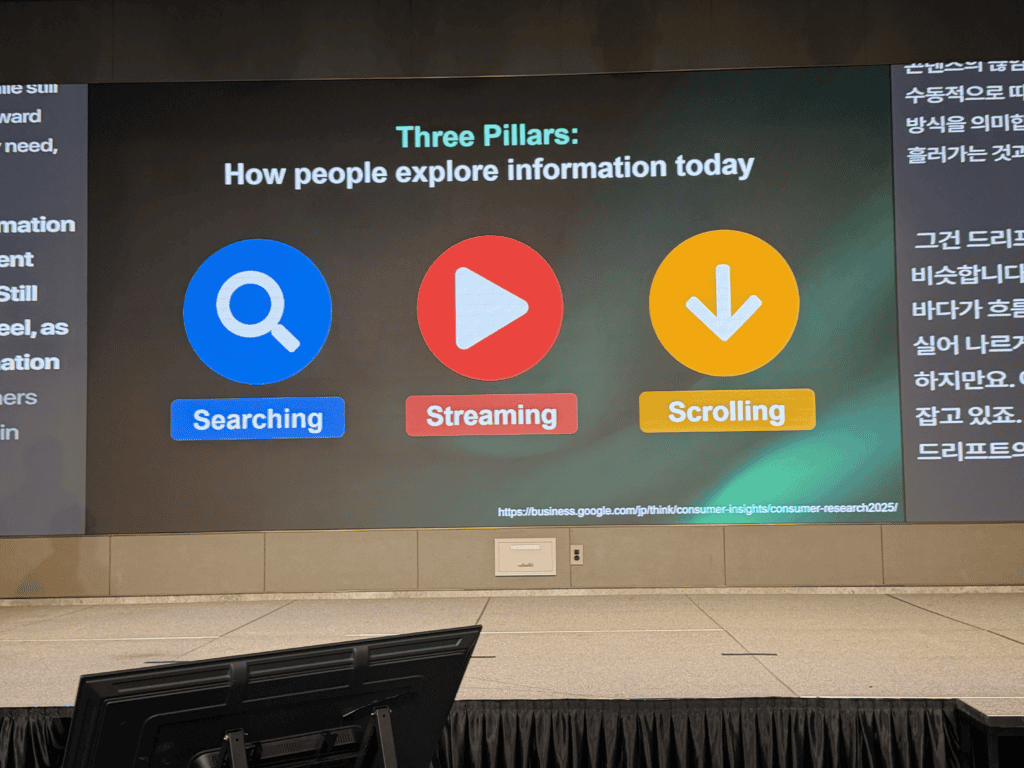
Google’s 2025 Japan consumer research (business.google.com/jp/think/consumer-insights/consumer-research2025/) describes three overlapping ways people explore information:
- Searching: keyword, image, video, and conversational queries, often outside classic search engines.
- Streaming: product and lifestyle video used for evaluation.
- Scrolling: passive discovery of new products and ideas in feeds.
The research frames this as information drifting rather than a linear funnel. None of the behaviors is confined to one platform:
- 1 in 2 people search for products outside of search engines.
- 1 in 2 people stream product videos outside dedicated video platforms.
- 2 in 3 people scroll into new product discoveries outside of social media.
Google remains the most-used platform for each behavior. AI and multimodal inputs are already part of searching.
Most Popular Social Media Platforms in Japan
The Ministry of Internal Affairs and Communications, Japan, surveyed 1,800 people aged 13 to 79 in December 2025. Reported usage rates were:
Japan social media usage
Most popular social media platforms in Japan
| Platform | Usage rate | YoY change | Approx. users (10,000s) |
|---|---|---|---|
| LINE | +1.8 pts | ~10,000 | |
| YouTube | +0.7 pts | ~7,300 | |
| +2.2 pts | ~3,300 | ||
| X (Twitter) | +1.4 pts | – | |
| TikTok | +3.5 ptsLargest increase | ~4,200 | |
| +0.2 pts | – |
LINE and YouTube dominate everyday use. TikTok shows the largest year-over-year increase.
Which social media sites are most cited by LLM searches local to Japan?
The following data comes from an analysis of citations generated by high-intent, Japan-specific search queries across multiple LLMs over a 90 day time period. We analyzed 342 unique, high-intent prompts and analyzed 6,934 total citations filtered for social media platforms.
AI Overviews (Google):
- youtube.com: 29.8%
- instagram.com: 29.0%
- facebook.com: 19.6%
- x.com: 13.2%
- note.com: 8.4%
- tiktok.com: 0.0%
ChatGPT
- note.com: 52.1%
- youtube.com: 47.9%
Gemini:
- youtube.com: 59.4%
- note.com: 27.6%
- facebook.com: 8.1%
- instagram.com: 4.6%
- tiktok.com: 0.2%
YouTube is the most consistent social citation source. note.com appears more often in AI citations than its relative usage ranking would predict, especially on Gemini. LINE and TikTok do not produce proportional citation volume in the available data.
Content Localization (Language, Writing Styles, and Trust)
Japanese writing uses two primary styles. Choosing the wrong one reduces trust even when the translation is accurate.
Japanese writing styles
Polite style vs plain style: when to use each
| Feature | Polite style (Desu / Masu)です・ます | Plain style (Da / Dearu)だ・である |
|---|---|---|
| Overall tone | Polite, formal, or respectful | Authoritative, objective, or direct |
| Best suited media |
Conference examples contrasted the two styles on sentences such as “Seoul is the capital of South Korea” and “Google is investing heavily in AI development.”
AI-assisted translation needs review by a Japanese speaker who understands both the subject and the appropriate style. Author profiles with a real name and headshot function as a trust signal.
Building Digital Authority (Backlinks) through Japanese Directories
The following data comes from an analysis of citations generated by high-intent, Japan-specific search queries across multiple LLMs over a 90 day time period. We analyzed 408 unique, high-intent prompts and analyzed 213,016 total citations filtered for social media platforms.
AI Overviews (Google)
- google.com: 57.2%
- jimin.jp: 8.7%
- wikipedia.org: 8.2%
- sangiin.go.jp: 6.6%
- lawzana.com: 6.3%
- kantei.go.jp: 3.5%
- ndl.go.jp: 2.8%
- nikkei.com: 2.4%
- meti.go.jp: 2.1%
- jiji.com: 2.1%
Gemini
- jimin.jp: 20.1%
- wikipedia.org: 13.2%
- ikyu.com: 10.1%
- retty.me: 7.6%
- sangiin.go.jp: 7.4%
- freee.co.jp: 7.2%
- kantei.go.jp: 6.9%
- itmedia.co.jp: 6.8%
- asahi.com: 6.3%
- hotpepper.jp: 5.1%
- google.com: 4.8%
- go2senkyo.com: 4.6%
ChatGPT
- tabelog.com: 27.2%
- jimin.jp: 11.2%
- sangiin.go.jp: 10.0%
- meti.go.jp: 9.4%
- shugiin.go.jp: 7.0%
- bengo4.com: 5.9%
- ndl.go.jp: 5.0%
- seiji-db.jp: 4.6%
- michelin.com: 4.4%
- wikipedia.org: 3.4%
- freee.co.jp: 3.4%
- reddit.com: 3.0%
- kantei.go.jp: 2.8%
- tripadvisor.com: 2.8%
Digital PR and Backlink Tips
Practical starting points:
- Note.com is Japan’s leading blogging and publishing platform and is often compared to Substack. In January 2025 Google invested approximately 490 million yen (roughly a 6 percent stake) and partnered on Gemini integration for writing assistance, moderation, and recommendations. The platform already appears in AI citation data.
- YouTube produces the most consistent citations across the systems examined. Start with high-intent video (product demonstrations, comparisons, expert explanations). X can serve as a secondary channel for Japanese-language updates. Instagram shows stronger citation volume on Google AI surfaces than on other models.
- Accurate listings and reviews on vertical directories (tabelog, retty, hotpepper, ikyu, or legal directories) align with surfaces that already receive citations.
Common SEO Issues on Many Japanese Sites
Many Japanese sites still use practices that reduce extractability for crawlers and AI systems. Teams that implement clean semantic HTML can gain a relative advantage.
Common issues include:
- Text placed inside images, including headlines and body copy.
- Incomplete or incorrect heading hierarchies (missing proper H2 and H3 structure).
- Incomplete hreflang when sites scale across languages.
- Limited structured data and author markup.
Fixing these elements often improves parseability relative to competitors that rely primarily on domain age or brand recognition.
Japan Search and Marketing Experts Worth Following
Who to follow
Japan search and marketing experts worth following
| Name | Focus | Follow |
|---|---|---|
| Kenichi SuzukiFaber Company | Real-time translations of Google algorithm updates with cultural context for Japanese search | |
| Einar SöderbergFounder, umoren.ai | LLM engineering for AI search | |
|
JADE
Noriaki ItoJADE (ja.dev)
Alisa PadurJADE (ja.dev)
|
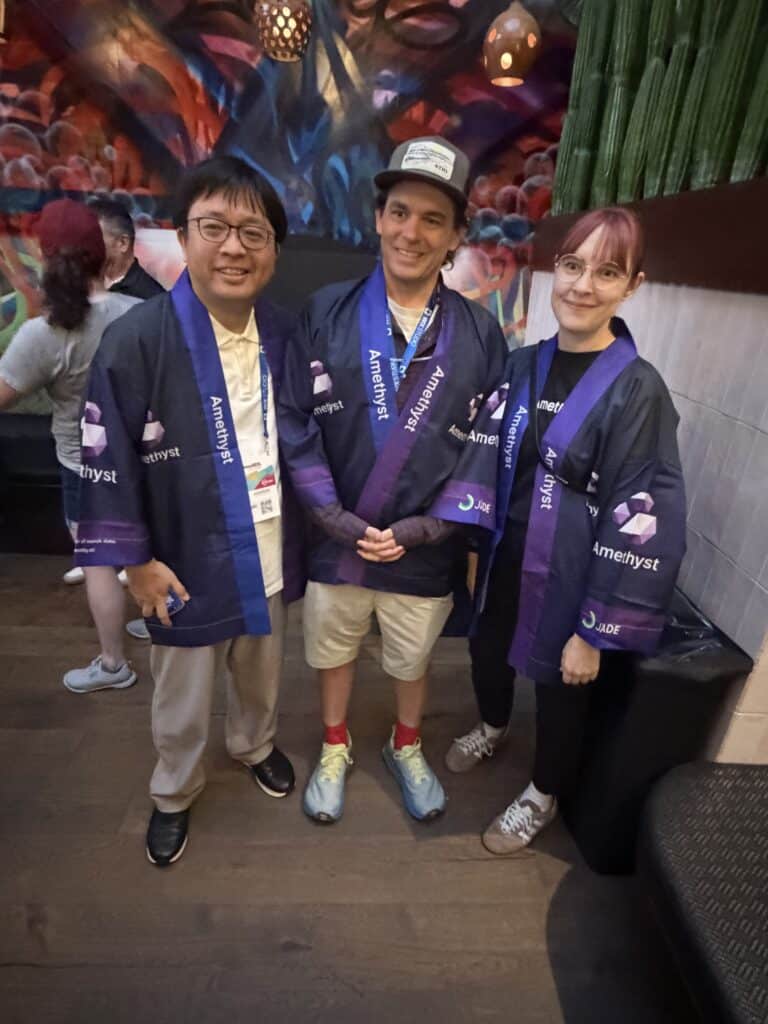
Noriaki: thought leadership for both Japanese and Western brands looking for international SEO expansion. Alisa: in-the-weeds SEO and LLMO delivery for clients. JADE is a Japanese SEO agency and the team behind Amethyst, an enterprise SXO/SEO tool. | |
|
DemandSphere
Ray GrieselhuberFounder, DemandSphere
Takeru MuroyaCountry Manager, Japan, DemandSphere
|
Enterprise SEO and AI visibility across the US and Japan. The team behind FOUND Conference, including FOUND Tokyo. |
These sources informed several of the observations above, see Best AI SEO Speakers and the Search SEOul 2026 review.
Kenichi Suzuki, Faber Company
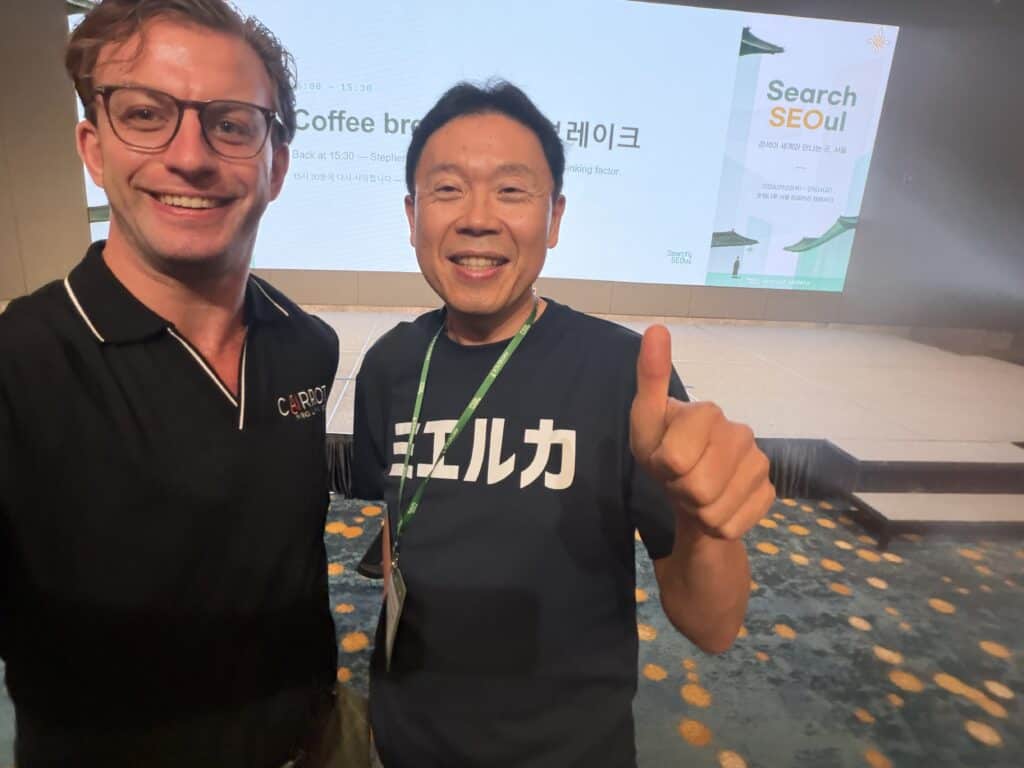
Kenichi Suzuki is the Search Advocate at Faber Company and one of the most widely followed SEO educators in Japan. His Overseas SEO Information Blog translates Google algorithm updates in near real time and adds the cultural context Japanese marketers need to act on them. If you only follow one source on how Google changes affect Japanese search, start here.
Einar Söderberg, umoren.ai
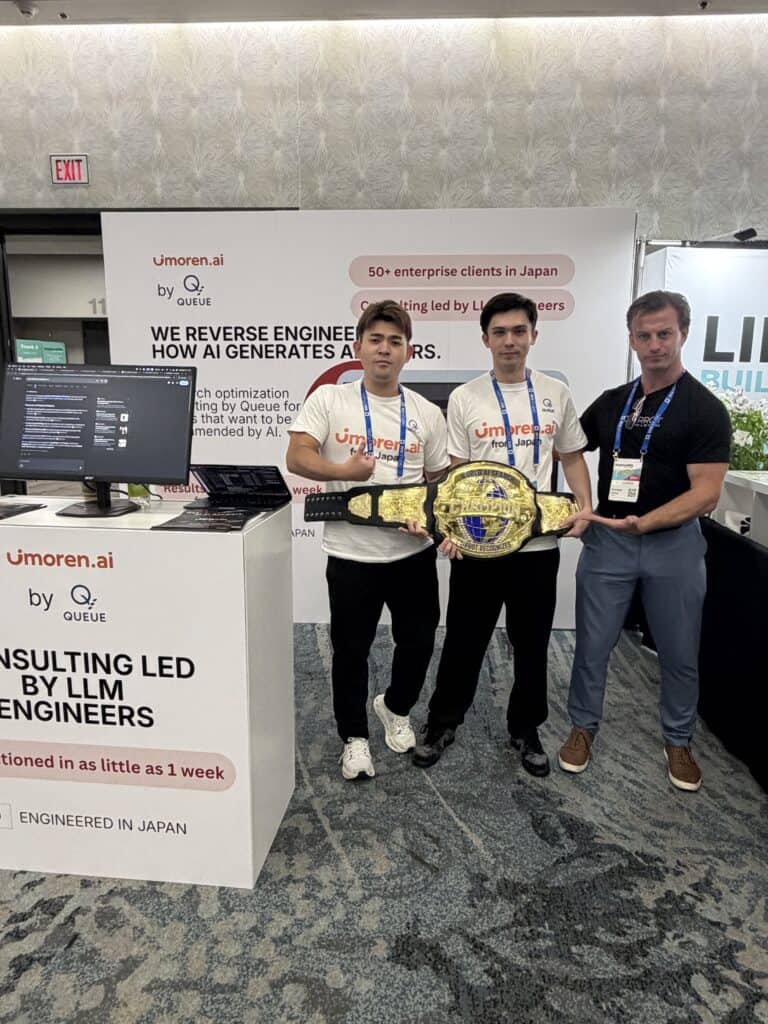
Einar Söderberg is the founder of umoren.ai, which focuses on LLM engineering for AI search. His work is a good fit for brands that want a custom approach to LLMO instead of relying only on off-the-shelf tracking tools. Follow umoren.ai if you are building AI visibility systems for Japan from the ground up.
Noriaki Ito and Alisa Padur, JADE
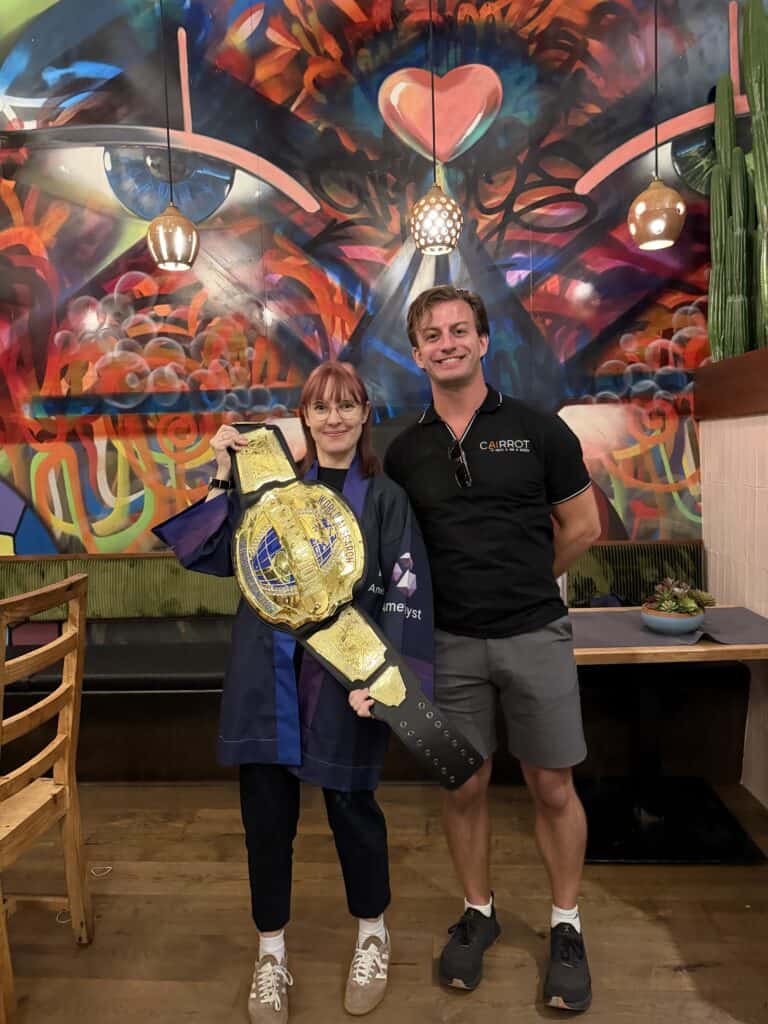
Noriaki Ito and Alisa Padur work together at JADE (ja.dev), a Japanese SEO agency that also builds Amethyst, an enterprise SXO/SEO tool. Noriaki provides thought leadership for both Japanese and Western brands looking at international SEO expansion, while Alisa is in the weeds of SEO and LLMO delivery for clients. Following Noriaki and Alisa gives you both the strategy view and the hands-on execution view from the same team.
Ray Grieselhuber and Takeru Muroya, DemandSphere
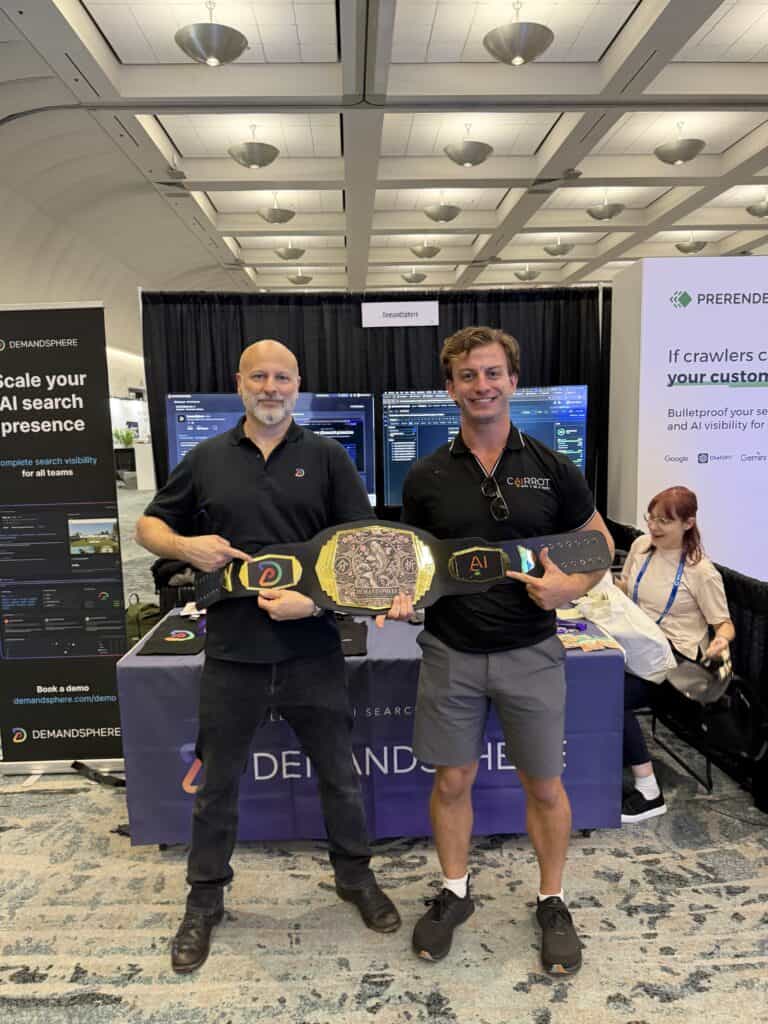
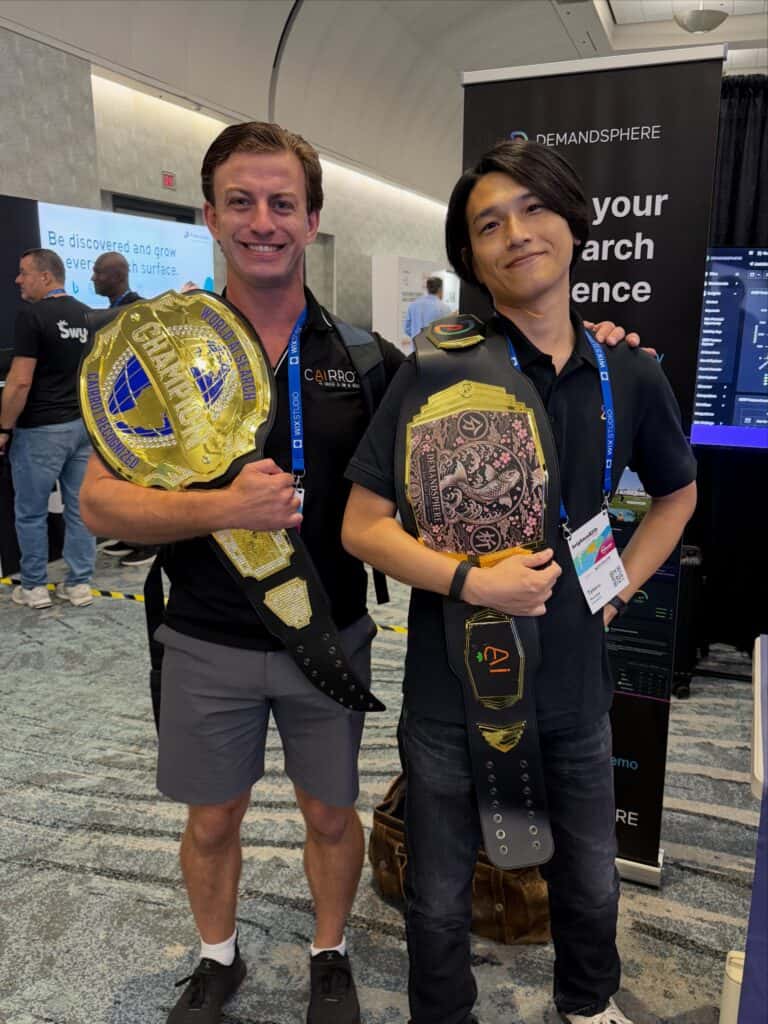
Ray Grieselhuber founded DemandSphere and leads its enterprise SEO and AI visibility work across the US and Japan. Takeru Muroya is DemandSphere’s Country Manager for Japan, a well-known name in the APAC SEO scene, and the person who brought the idea for FOUND Conference Tokyo to Ray. Together they are worth following for both the global platform view and the on-the-ground view of the Japanese market.
Frequently Asked Questions
What LLMO KPIs and metrics should I track?
Focus on AI visibility (share of voice), agentic traffic, and referral traffic from AI platforms. Traditional search rankings matter less than how often and how prominently your brand appears in AI answers. For a practical breakdown of the metrics and how to track them, see the guide on how to track LLM rankings and traffic.
Which LLMs should I prioritize when trying to reach a Japanese audience?
In Japan, ChatGPT is the most downloaded LLM app by far. But Google’s ecosystem, which includes AI Overviews and Gemini, reaches more consumers on a daily basis. If I could only choose two, I choose to optimize for ChatGPT and AI Overviews.
Do I need Japanese-specific SEO or LLMO tools?
Yes for visibility tracking. Of course I use Cairrot for global AI visibility across models and markets, including Japanese. Strong alternatives include DemandSphere’s AI Visibility solutions (Ray’s company) or a custom approach built around LLM engineering from umoren.ai (Einar’s company). For Japanese keyword research, ListeningMind by Ascent AI works great even at the freelancer level and has enterprise features that pair with open data approaches. I have also heard positive feedback on Amethyst, the enterprise tool from JADE (Noriaki’s agency, also repped by SEO expert Alisa Padur).
What digital marketing events should I know about in Japan?
Faber Company runs regular Japanese SEO and marketing events. FOUND Conference, organized by DemandSphere, brings together enterprise search and AI practitioners and has a strong Japan presence. Several other digital marketing conferences in Japan also offer English-language tracks. For a broader list of AI SEO and AEO events, see the roundup of best AI SEO conferences.
What URL structure should I use for Japanese pages?
Japanese characters in URLs on an English domain are fine. English-language pages are more likely to rank in Japanese search than the reverse. I recommend a structure such as domain/jp/japanese-characters. Mixing English characters with Japanese words is also acceptable when it matches how people actually search.
Instagram or X for discovery in Japan?
It depends on the niche and target demographic. YouTube remains the priority for consistent AI citations and discovery. Instagram and X can support specific audiences once core content exists, but neither matches YouTube’s citation strength across the models examined.