
You don’t rank in Perplexity the way you rank on a results page. Perplexity runs a live search, reads the pages it retrieves, writes an answer, and cites the sources it used. Your goal is to be one of those numbered citations. This guide covers what the evidence says drives that selection, what to change on your pages, and how to measure whether it worked.
TL;DR
- Perplexity searches the web on each query and cites its sources, so “ranking” means being retrieved, trusted, and quoted in the answer.
- Authority, clear structure, fresh content, and topical depth show up repeatedly in the research. Keyword matching alone is not enough.
- Pages that rank well in Google are more likely to be cited. One analysis found 60% of Perplexity citations overlapped with Google’s top 10, so keep your SEO foundation.
- Track citations prompt by prompt, because answers change and a one-off check tells you little.
Table of Contents
- What “ranking” means in Perplexity
- How Perplexity chooses what to cite
- Seven changes that improve your odds
- Keep your SEO foundation
- Build the signals outside your site
- How to measure Perplexity visibility
- Our perspective: treat Perplexity as a research assistant, not a ranking table
- Track and scale it with Cairrot
- FAQ
- Sources
What “ranking” means in Perplexity
In a traditional search engine, you compete for a position on a list. In Perplexity, the output is a written answer with numbered references. Perplexity’s own documentation describes the product as an answer engine, and its developer docs show how citations arrive as numbered references tied to a list of source URLs.
That changes what you optimize for. There are three outcomes worth separating:
- Retrieved: your page is pulled into the candidate set for a prompt.
- Cited: the model uses your page and links to it in the answer.
- Recommended: your brand is named in the answer text, often for “best” or “top” style prompts.
Most teams only measure the second. The third is where commercial value sits, and it depends on what the wider web, including forums and video, says about you.
How Perplexity chooses what to cite
No outside party sees Perplexity’s full system. What we have is a mix of the company’s own statements and independent research. Treat the research as strong directional evidence, not a spec sheet.
Entity-level quality filtering
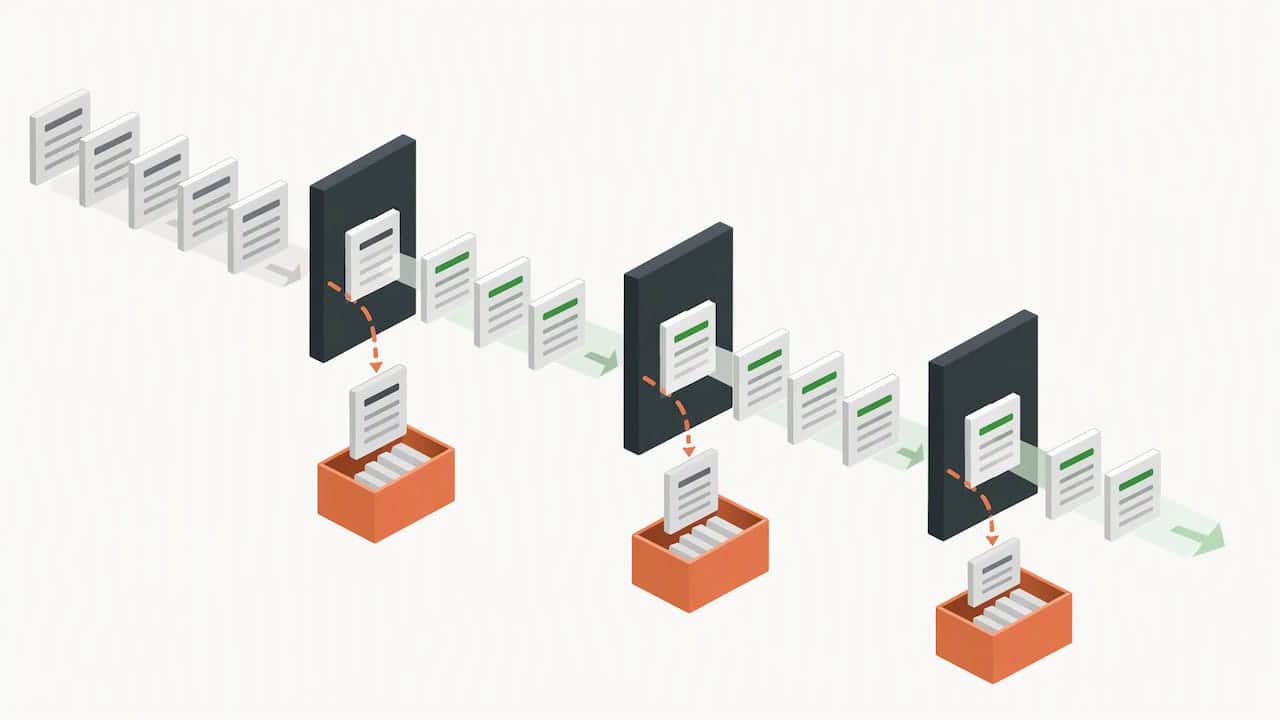
Independent researcher Metehan Yesilyurt studied browser-level interactions with Perplexity’s infrastructure. His findings, published by Search Engine Land, describe a three-layer machine learning reranker for entity-based searches. According to that research, result sets that fail topical authority and quality thresholds can be discarded. The practical lesson: matching a keyword is not enough. Your page has to look like it comes from a source that knows the subject.
Manual boosts for known domains
The same research reports manually curated lists of authoritative domains, such as GitHub, LinkedIn, and Amazon, that receive an authority boost. Content that is linked from or appears on those domains may gain an advantage. You can’t control that list, but you can make sure your brand has a real, complete presence on the platforms that sit on it.
Source labels
Perplexity also marks some cited domains with a shield icon. Its help center explains that Government, Academic, and Trusted labels come from a source review process. The criteria are objective: transparent authorship, clear separation of news from advertising, and consistent correction of mistakes. Business arrangements are not part of it. You can’t buy a label, but you can meet the same standards on your own site.
What gets cited by format
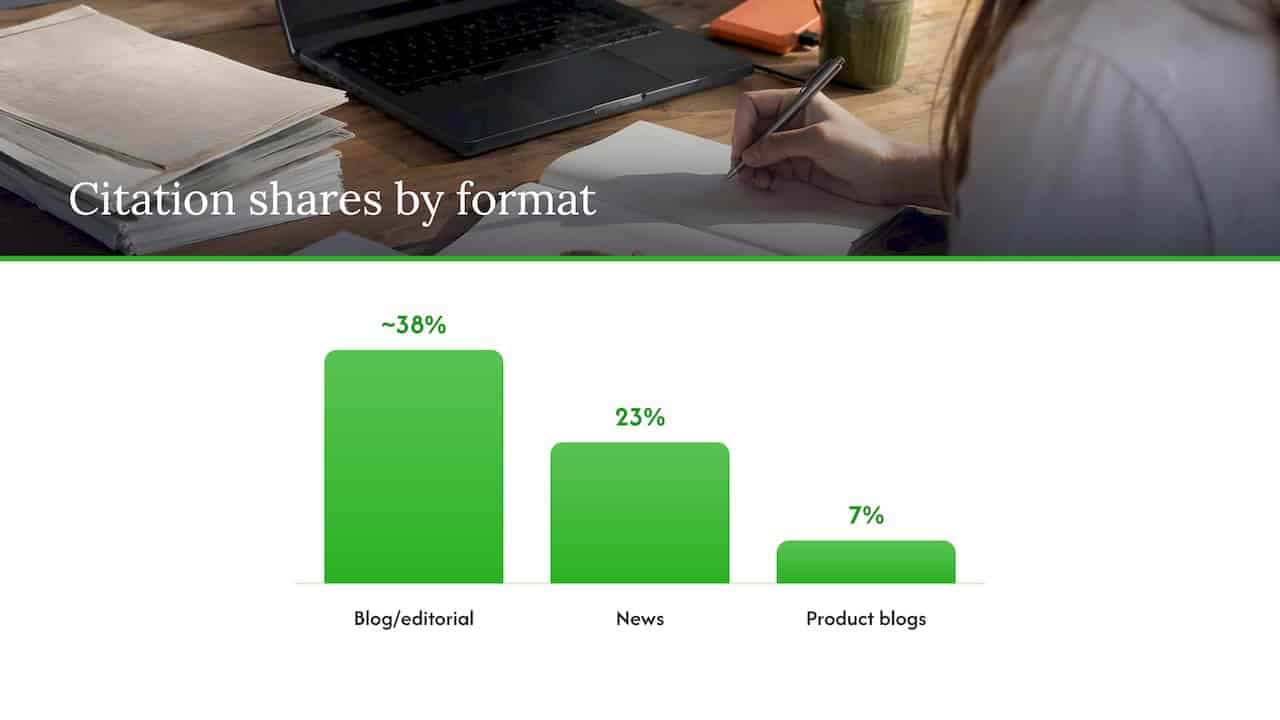
An analysis of 8,000 AI citations found that blog and editorial content made up roughly 38% of Perplexity citations, followed by news at 23% and product blogs at 7%. The same analysis points to a preference for trusted, expert niche sites and review platforms. If you only publish product pages, you are competing for the smallest slice.
YouTube as a signal
The Yesilyurt research also detected a link between YouTube and Perplexity: video titles that match trending Perplexity queries appeared to get a visibility boost. The mechanism is not confirmed by Perplexity, so treat it as a reason to test video, not a guarantee.
Seven changes that improve your odds
1. Lead every section with the answer
Perplexity extracts passages. A paragraph that opens with a plain definition or direct answer is easier to lift than one that builds to a point. Write headings that mirror the way people phrase prompts, and put a one- or two-sentence answer directly under each.
For example, under a heading about pricing models, the first sentence should state the pricing models, not discuss why pricing is hard.
2. Make paragraphs self-contained
A retrieved passage loses its surroundings. Avoid “as mentioned above” and pronouns that depend on earlier text. Name the product, the concept, and the number in the same paragraph. Lists and tables help because each row stands alone.
3. Back claims with named sources
Specific, checkable statements are easier for a model to trust and quote than vague ones. Replace “the market is growing fast” with a figure, a date, and a link to where it came from. This also helps you meet the transparency standards behind Perplexity’s source labels.
4. Show who is behind the content
Author names, credentials, an about page, a correction policy, and a clear line between editorial and advertising all map directly onto the label criteria above. Add Article, Organization, and Person markup so machines can read those facts too. Our guide to schema for AI citations walks through the three types we see matter most.
5. Refresh what you want cited
Freshness is a recurring theme across practitioner guides on Perplexity. Pick the pages that matter commercially, update the data, change the visible date only when the substance changed, and review them on a schedule. A quarterly pass for your top pages is a sensible starting rhythm. It is our practice recommendation, not a Perplexity requirement.
6. Build clusters, not one-offs
The research summary suggests that interlinked content clusters outperform isolated articles, along with topic selection and early engagement signals. Plan a pillar page, then supporting pages that answer the specific follow-up questions, all linking to each other. If you are building that plan, our overview of AEO strategies backed by data shows how we structure it.
7. Let the crawler in
A page that Perplexity’s crawler can’t fetch can’t be cited. Check your robots.txt, your firewall, and your CDN rules for blocks on PerplexityBot. This is a common accidental failure on sites that tightened bot rules during the last couple of years. Also check that key content renders without heavy client-side scripting.
Keep your SEO foundation
Perplexity retrieves from the live web, and the overlap with Google results is substantial. The 60% overlap figure comes from a 2024 analysis, which also found the overlap was highest in healthcare at 82%. Overlap numbers shift as products change, so don’t treat them as fixed. The takeaway holds: strong technical SEO, good internal linking, and earned authority feed AI visibility rather than compete with it.
Where the two diverge is on format and off-site presence. A page can rank well on Google with a long preamble and still be skipped by an answer engine that wants a clean, quotable passage. For a wider view of connecting classic SEO to answer engines, see this piece on optimizing your website for AI search.
Build the signals outside your site
Answers about “best” tools or providers rarely rely on your own pages alone. They draw on forum threads, reviews, video, and third-party lists. That means your off-site footprint is part of your Perplexity strategy.
- Reviews and comparisons: make sure your profiles on professional review platforms are complete and current.
- Community discussions: be present and useful where your buyers ask questions, without astroturfing.
- Video: publish explainers whose titles match how people phrase questions.
- Publisher relationships: Perplexity has a Publishers’ Program that gives partner publishers API access and revenue sharing. It shows how much weight the platform places on trusted media. It’s aimed at publishers, so most brands will earn visibility through quality and mentions instead.
How to measure Perplexity visibility
Citations vary by prompt, by wording, and over time. A single manual search tells you very little. A workable measurement routine looks like this:
- Build a prompt set of 30 to 100 questions your buyers actually ask, grouped by funnel stage.
- Run them on a regular schedule and record whether you are cited, mentioned, or absent.
- Log which URLs are cited, and which competing types of sources win instead.
- Track sentiment: when you are mentioned, is it positive, neutral, or hedged?
- Compare against your analytics. Referral traffic from Perplexity in GA4 and engagement on cited pages show whether visibility turns into visits.
- Revisit the pages that lose citations and check freshness, structure, and crawl access first.
This is the gap a dedicated tracker closes. Our Perplexity rank tracker was built for exactly this routine, and our AI SEO best practices guide covers the failures that most often block citations.
Our perspective: treat Perplexity as a research assistant, not a ranking table
We talk to agencies, in-house content teams, and developers every week, and the same mistake repeats. They look for a single “Perplexity algorithm” to game. There isn’t a stable one, and the evidence suggests that the system rewards the same things a careful human researcher would: sources that are transparent, specific, current, and corroborated elsewhere.
That is why we build around unified analytics across AI and traditional search instead of treating each engine as an island. The same page might win in Perplexity, lose in ChatGPT, and be quoted differently in Gemini. Seeing those differences side by side is what turns a hunch into a plan.
We also give weight to what Reddit and YouTube say about a brand, because cited conversations shape recommendations. A tidy site with a hostile forum thread is a weaker bet than most teams expect. Sentiment tracking exists to catch that before a buyer does.
Our advice is simple. Fix the fundamentals, publish passages that are easy to quote, measure by prompt, and iterate. Users typically see measurable AEO movement in as little as 60 days when they work this way, though results depend on your starting point and your market.
— Dr. Patrick McAvoy
Track and scale it with Cairrot
If you manage Perplexity visibility for one brand, a spreadsheet may do for a month. If you manage ten clients, or an enterprise with many markets, you need structure. Cairrot gives you audits of your AEO performance, competitor benchmarking, sentiment tracking across ChatGPT, Gemini, Claude, Perplexity, Grok, and DeepSeek, plus Reddit and YouTube, and white-label reporting with GA4 and Search Console integrations.
Published plans are Starter at $39 per month, Pro at $99 per month, and Enterprise at $299 per month. Grok monitoring and analytics is available from $25 per month. See the details on our pricing page, or explore AEO audits, insights, and unified analytics to see which fits your team. Developers can also look at our API and MCP tools.
FAQ
Does Perplexity have a ranking algorithm like Google?
Not one that is publicly documented. Perplexity retrieves pages from the live web, then selects and cites sources for the answer. Independent research describes reranking and authority signals, but those findings come from outside observation, so treat them as informed hypotheses.
How do I get my site cited in Perplexity?
Make sure the crawler can access your pages, then give each section a direct, self-contained answer backed by named sources. Add author and organization details, keep key pages fresh, and build topic clusters. Then track citations by prompt to see what changes.
Can I pay to be a trusted source in Perplexity?
No. Perplexity says its Government, Academic, and Trusted labels rest on objective criteria such as transparent authorship and consistent corrections, not business arrangements. The way to earn one is to meet those standards on your own site.
Is Perplexity SEO different from regular SEO?
It overlaps heavily but is not identical. Strong Google rankings correlate with more citations, yet answer engines also reward quotable passages and off-site mentions. Plan for both rather than choosing one.
Sources
- How Perplexity ranks content: research uncovers core ranking factors and systems
- Understanding source labels, Perplexity Help Center
- How to get cited by AI: SEO insights from 8,000 AI citations
- 60% of Perplexity citations overlap with top 10 Google organic results
- What is an answer engine and how does Perplexity work?
- Streaming citation parsing, Perplexity docs
- Introducing the Perplexity Publishers’ Program