
To rank in Claude, you earn mentions and citations inside its answers, because there is no page-one list to climb. The highest-impact move is writing short, citation-ready passages and monitoring live Claude responses to see which ones get picked up. Our platform, Cairrot, helps you track AEO performance and act on the results.
TL;DR:
- Track brand mentions, cited URLs, quoted passages, sentiment, and share of voice; rerun each prompt because Claude’s answers vary between runs.
- Place concise answers with supporting facts beneath relevant question headings; keep pages crawlable, correctly canonicalized, and listed in your sitemap; no special markup is required.
- Over the first 60 days, test 10–25 revenue related queries, revise 5–10 priority pages, then automate monitoring and connect results to conversions.
- Use a prebuilt tracker for scheduled reporting, or build API monitoring for custom fields and warehouse integration; send lost citation alerts through Slack or email.
Table of Contents
- What Claude rank tracking is and why it matters
- How Claude finds and cites your content: web search, API citations and tool use
- How to track your brand in Claude: manual checks, automated trackers and API monitoring
- Actionable optimization checklist to increase Claude citations
- Tools, integrations and workflows to automate Claude monitoring
- Why practitioner experience matters in Claude optimization
- What I would do in the first 60 days
- Start tracking and improving your Claude visibility with Cairrot
- FAQ
- Sources
- Key documentation and product pages to consult
What Claude rank tracking is and why it matters
Claude has no ordered list of blue links. Your “rank” is whether Claude names your brand, cites your page, and how it frames you when it does. We measure that with a small set of signals:
- Mention boolean: did your brand appear in the answer at all?
- Citation occurrence: did Claude point to one of your URLs as a source?
- Cited text context: which exact passage of yours did Claude pull, and what surrounded it?
- Sentiment and share of voice: was the tone positive, neutral or negative, and how often are you named compared with others in your category?
This matters because high-intent research can finish inside Claude. A buyer asks for a recommendation, reads a synthesized answer and shortlists vendors without opening a single site. Traditional SEO rewards the click. Claude visibility rewards being the name in the answer, and that is still valuable even when no visit follows. Expect brand recall and assisted conversions, not just sessions, and measure accordingly.
How Claude finds and cites your content: web search, API citations and tool use
When Claude needs fresh information, it can search the web. Anthropic introduced web search on its API so Claude can generate targeted queries, retrieve results and answer with citations back to the source. Understanding the mechanics shows you what you can influence:
- Tool versions: the web search tool comes in versions. The basic one is web_search_20250305. The newer web_search_20260209 adds dynamic filtering, where Claude writes and runs code to filter results before they enter the model, plus response inclusion controls.
- Deciding to search: with tool use, Claude chooses when to call a tool based on the request and the tool descriptions. A developer can also cap searches per request with max_uses.
- Citation output: the citations feature returns structured pointers and a cited_text excerpt showing which source text the model used.
- Citable search results: search results returned by tools are automatically citable, with citation pointers in the response.
Your takeaway: pages that are easy to retrieve and contain a clean, self-contained passage give Claude something it can quote.
How to track your brand in Claude: manual checks, automated trackers and API monitoring
Start small, then automate. Here is the workflow we recommend:
- Build a test set. Pick a set of high-value queries and a few natural prompt phrasings for each, such as category questions, comparisons and “best tool for…” requests.
- Run manual spot checks. Log whether you appear, which URL Claude cites and the cited text. Note competitors named alongside you.
- Schedule automated queries. Use a tracker or the Claude API to rerun the set on a cadence and capture mention boolean, citation context, sentiment and share of voice.
- Log structured fields. If you build your own, call web search or feed Claude your own search results, then store citation fields in a database for trend analysis.
- Set cadence and alerts. Check priority queries daily or weekly, category-wide queries monthly, and alert on lost citations or sentiment drops.
Pro Tip: Run each prompt several times. Claude’s answers vary between runs, so track presence as a rate across runs, not a single yes or no.
Our Claude Rank Tracker handles steps 3 through 5 for you.
Actionable optimization checklist to increase Claude citations
Work through these in order. The highest-impact steps come first.
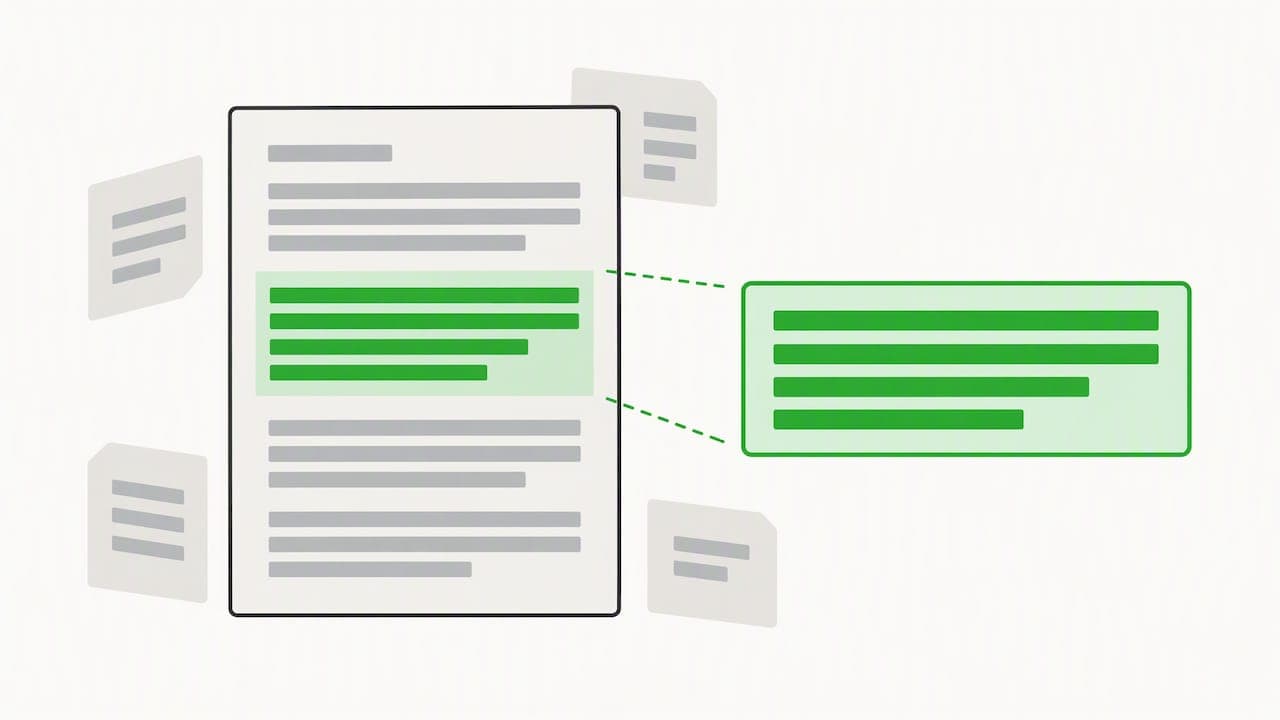
- Write answer passages. For each likely prompt, give a concise answer with a clear claim and a supporting fact, placed right under a heading that matches the question.
- Add sourceable facts. Short, quotable sentences with a specific figure, definition or date are easy for Claude to return as cited text.
- Make pages discoverable. Confirm nothing blocks crawling, canonical tags point to the right URL and your sitemap lists the page. Google’s own guidance notes there is no special markup required for AI features; being indexed and meeting technical requirements is what counts, and the same fundamentals tend to help elsewhere.
- Structure for extraction. Use clear headers, lists and short lead paragraphs so retrieval systems can lift a clean passage.
- Keep it fresh. Date your evidence, link primary documents and update pages when facts change.
Google’s guidance also explains that query fan-out and retrieval-augmented generation gather supporting pages, which is a useful mental model for how AI assistants assemble sources.
Pro Tip: Read each page aloud as if it were a one-paragraph answer. If a stranger could not quote it out of context, rewrite the passage until they could.
Tools, integrations and workflows to automate Claude monitoring
You have a few routes, and most teams combine them:
- Claude-aware rank trackers: purpose-built tools that rerun your queries on a schedule and report mentions, citations and sentiment.
- General LLM visibility tools: broader monitors that cover several AI assistants in one dashboard.
- API monitoring: your own scripts that call web search and store structured citation fields.
- Custom agentic crawlers: workflows that browse and log how AI answers describe you.
Pipe results into the tools you already use: Slack or email alerts for lost citations, citation logs in your analytics warehouse, and comparisons against GA4 and Search Console signals to see whether citation gains line up with traffic or branded search. Choose a prebuilt tracker when you want results this week and reporting for clients. Build an API workflow when you need custom fields or deep warehouse integration. Teams weighing a build can find useful background in this developer guide to OpenAI and Anthropic.
Why practitioner experience matters in Claude optimization
AI visibility is a young field, and much advice is untested. Dr. Patrick McAvoy wrote this guide from a practitioner’s view of AEO, where the useful question is always what you can measure and repeat, not what sounds plausible. We built our platform around that same idea. The capabilities that map to this workflow:
- AEO analytics to track performance over time
- AEO audits and reports to find the gaps in your AI visibility
- Unified analytics that put AI and traditional search data side by side
- Sentiment tracking across sources such as Reddit and YouTube
Together they cover the loop described above: baseline, fix, monitor, measure. See the AEO solutions page for details.
What I would do in the first 60 days
Start with a quick AEO audit and pick 10–25 queries that matter to revenue. Rewrite 5–10 priority pages with citation-ready passages. Then switch on automated monitoring and tie it to conversion tracking so you can see what moved. Resist the urge to rewrite everything at once; a small, measured set of edits teaches you more.
— Dr. Patrick McAvoy
Start tracking and improving your Claude visibility with Cairrot
You know which passages to write. Our platform provides unified AEO analytics, AEO audits and reports, and sentiment tracking to help you monitor and improve visibility, so you can spend more time on content.
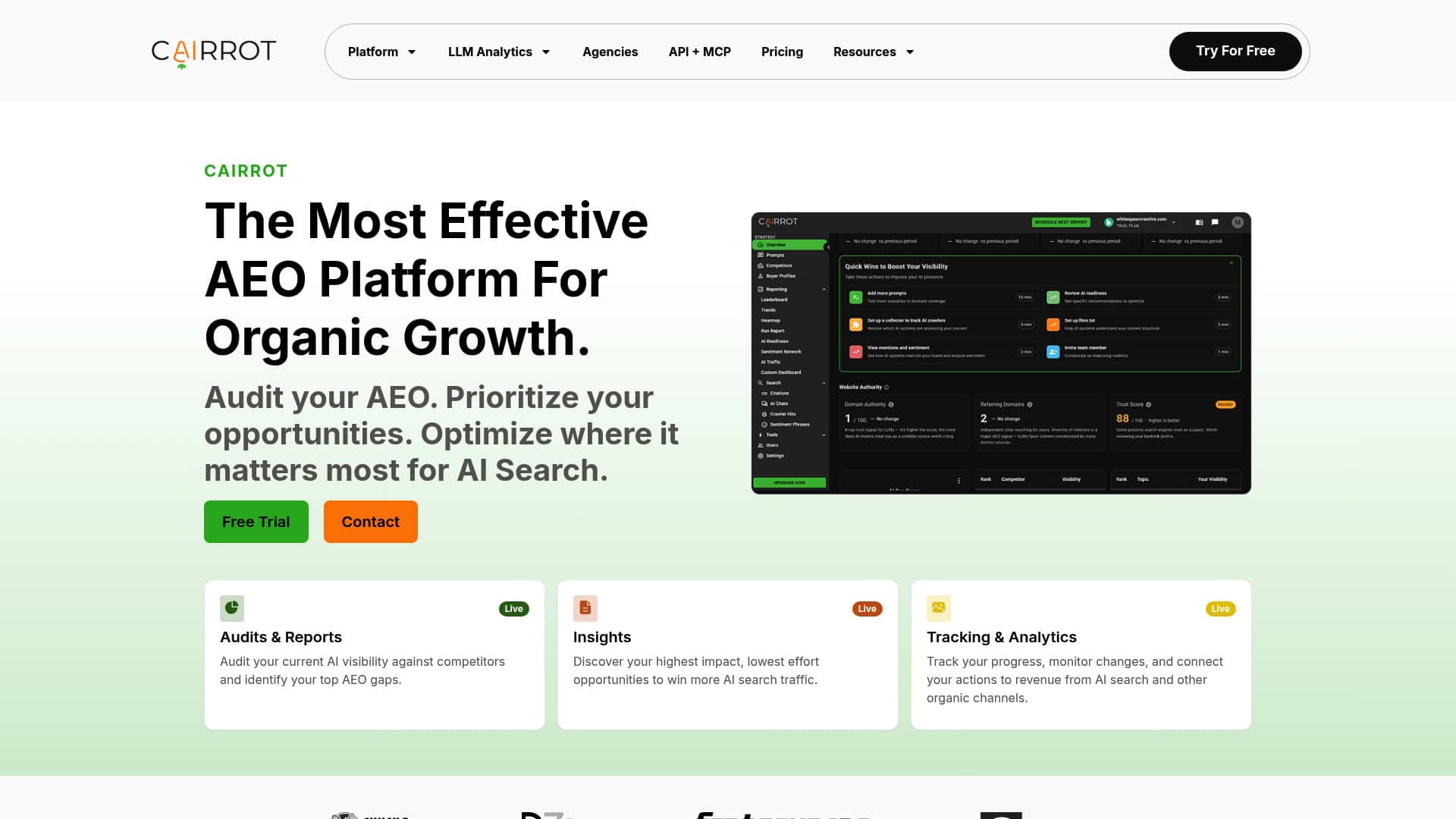
Our clients can use the platform to track their AEO results over time. Compare Starter at $39 per month, Pro at $99 per month and Enterprise at $299 per month, or request an audit and we will show you where you stand in Claude today.
FAQ
Where does Claude rank among AI assistants?
There is no single official ranking, and the answer depends on the task and the benchmark you use. For marketers the more useful question is whether Claude cites your brand for the prompts your buyers actually use.
What are the different tiers of Claude?
Anthropic offers Claude in several model sizes and plans, and the lineup changes often. Check Anthropic’s current documentation for the exact names rather than relying on an older list.
Does Google still use RankBrain?
Google has said little about it recently, so treat claims either way with caution. What Google’s own guidance stresses is that indexing and SEO fundamentals remain the foundation for appearing in its AI features.
Do I need special markup to be cited by Claude?
No special markup is documented for Claude. Clear, quotable passages on indexable, easily discovered pages give its search and citation systems the best material to work with.
Sources
- Introducing web search on the Anthropic API | Claude by Anthropic
- Web search tool
- Citations
- Search results
Key documentation and product pages to consult
For the technical side, read Anthropic’s documentation on the web search tool, tool use and citations. For the product side, our Claude Rank Tracker, AEO solutions and pricing pages show how the workflow above runs in practice. For a deeper playbook, our guide to AI citation tracking pairs well with this plan.